
Introduction
If you’ve ever been self-conscious about the appearance of your teeth, we can relate. Cosmetic bonding is a highly sought-after treatment that works to address all sorts of imperfections, whether they are cracks, chips, spaces or shades. Whether you are thinking of bonding to improve your smile or just to make a quick repair, this is an easy way to get the smile that you’ve always dreamed of! But what is cosmetic dental bonding and how does it work?
We’ll deep dive into everything you need to know about cosmetic dental bonding in this complete guide, from the pros and cons of getting it done, how much it costs, alternatives you should consider instead, and so much more. By the time you finish reading, you’ll have all of the information needed to determine whether dental bonding is for you.
What is Cosmetic Dental Bonding?
Cosmetic tooth bonding is when a tooth-colored resin material is applied to your teeth, shaped and polished to improve the appearance. The resin is then formed to resemble the natural shape of your teeth and hardened with a particular light in order that it adheres towards your tooth. This procedure is non-invasive with regard to the involvement of tooth structure, and can be performed in one visit at an affordable cost.
How Does Cosmetic Dental Bonding Work?
The process of cosmetic dental bonding is simple and straightforward. Here’s a step-by-step breakdown:
- Consultation and Planning: Your dentist will assess your teeth to determine if bonding is suitable for you. This includes evaluating your dental health and discussing your desired results.
- Tooth Preparation: Unlike other procedures, dental bonding requires little to no tooth preparation. Your dentist may roughen the surface of the tooth slightly for better adhesion.
- Application of Resin: The tooth-colored resin is applied to the area that needs treatment. The dentist will carefully shape and mould the resin to match the shape of your tooth.
- Hardening: A special ultraviolet light is used to harden the resin, ensuring it stays in place and feels natural.
- Finishing Touches: Once the resin has hardened, your dentist will smooth and polish the bonded area to match the shine and texture of your natural teeth.
Benefits of Cosmetic Dental Bonding
- Quick Results: The procedure is completed in one visit, typically lasting 30 to 60 minutes.
- Affordable: Compared to veneers and crowns, cosmetic dental bonding is one of the most budget-friendly dental treatments available.
- Minimal Tooth Alteration: Unlike veneers or crowns, dental bonding requires little to no removal of natural tooth structure.
- Natural Look: The resin used for bonding is colour-matched to your natural teeth, ensuring a seamless appearance.
Cosmetic Dental Bonding Price and Dental Bonding Cost
A primary reason individuals opt for cosmetic dental bonding is how low the cost tends to be. The price of dental bonding is dependent on the overall complexity of the treatment, the specific location being treated and where you live. In the US, dental bonding for cosmetics costs anywhere from $300 to $600 per tooth.
While this is generally less expensive than alternatives like veneers or crowns, the price can fluctuate depending on factors such as:
- Location: Cosmetic dental bonding price in big cities might be higher than in suburban areas.
- Dentist’s Experience: Highly experienced cosmetic dentists may charge a premium for their services.
- Number of Teeth: The more teeth you need treated, the higher the total cost of the procedure.
If you’re searching for cosmetic dental bonding near me, it’s a good idea to compare prices in your area to get the best deal. Some dental offices may offer financing options to help with the cost.
Teeth Bonding vs Veneers: Which is Right for You?
When considering cosmetic dental bonding, you may wonder how it compares to other cosmetic treatments like veneers. While both treatments can fix similar issues like chipped, discoloured, or misaligned teeth, there are some key differences:
- Teeth Bonding:
- More affordable.
- Faster procedure (one visit).
- Requires less tooth preparation.
- Not as durable as veneers (may need touch-ups every 5-10 years).
- Veneers:
- More durable (lasts 10-15 years).
- Require tooth enamel removal.
- Can be more expensive.

Teeth Bonding Disadvantages: What You Need to Know
While cosmetic dental bonding is a great option for many, it’s important to understand that it does have some disadvantages:
- Less Durability: Dental bonding is more prone to staining and chipping compared to veneers or crowns. While it works well for minor repairs, it may not be the best option for high-stress areas like the back teeth.
- Potential for Wear: Although the bonding material is strong, it can wear down over time, especially if you have habits like grinding your teeth.
- Frequent Touch-ups: If you don’t care for your bonded teeth properly, they may require touch-ups or replacements every few years.
Dental Bonding Before and After: What Can You Expect?
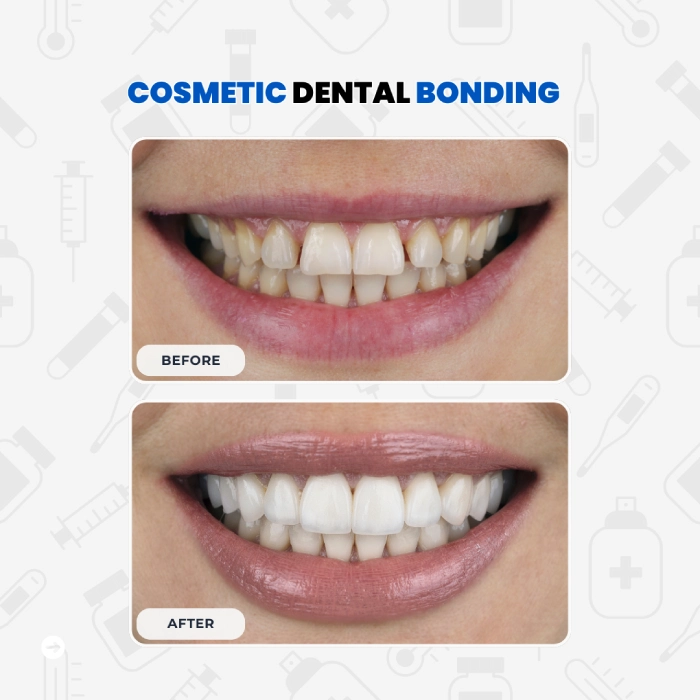
To help you understand the effectiveness of cosmetic dental bonding, it’s useful to consider before-and-after pictures of patients who’ve undergone the procedure. Here’s what you can expect:
- Before: Teeth may be chipped, cracked, discoloured, or unevenly spaced.
- After: The treated teeth will look smooth, natural, and aesthetically pleasing. The resin will blend seamlessly with the rest of your teeth, providing a natural and refreshed smile.
Composite Bonding Ruined My Teeth: What Happened?
While composite bonding (the material used in dental bonding) is generally safe, there are reports from some individuals who feel that composite bonding ruined their teeth. This can happen for a few reasons:
- Improper Application: If the bonding isn’t done correctly, it may cause discomfort, wear down prematurely, or damage the underlying tooth.
- Poor Maintenance: Neglecting oral hygiene or engaging in habits like biting nails or chewing on hard objects can cause the bonding material to chip or stain.
If you’ve experienced issues after composite bonding, it’s essential to consult with your dentist about possible fixes, touch-ups, or other treatments.
Conclusion
Cosmetic dental bonding provides an affordable, conservative and easy solution for a variety of cosmetic dental problems. Whether the issue is chips, cracks, gaps or discolouration issues, you can count on bonding for an attractive and natural-looking result.
If you think dental bonding is right for you, it’s important to speak with your dentist and determine if this procedure is suitable for your individual dental needs. If you’re looking at dental bonding price, teeth bonding vs veneers or want to know, “what is the cost of cosmetic dental bonding near me,” we get it!