
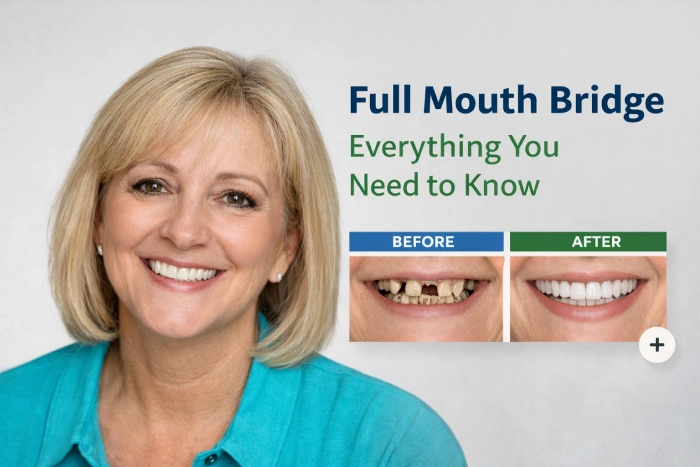
If several teeth are missing or broken, a full mouth bridge may be the answer to restoring your smile. This is much the same thing that has happened with restorative dentistry, and it has changed the game for many people when it comes to a cheaper, more effective way to enhance both function and appearance in your mouth. Yet what is a full mouth bridge and more specifically, how does it work, and can one benefit you?
In this article, we’re going to cover the ins and outs of full mouth bridges: what they are, how they’re done, why you might want to consider them, costs involved and more. If you’re thinking about it or just curious to know how full-mouth bridges work, read below for an in-depth guide on what they are.
What is a Full Mouth Bridge?
Full Mouth Bridge: What to Expect A full mouth bridge, which can also be called a full arch bridge, is ideal for restoring several missing teeth or an entire set of teeth in the upper or lower jaw. Unlike other bridge types, which are used to replace only a few missing teeth, a full mouth bridge involves an extensive span of missing or compromised dentition; consequently, offering both oral function and aesthetic benefits.
In general, A full mouth bridge is a series of linked crowns. These crowns attach to healthy teeth or dental implants on both sides of the gap to provide support and stay in place.
How Does a Full Mouth Bridge Work?
The process of getting a full mouth bridge is like traditional dental bridges, but it involves more extensive work due to the larger number of teeth being replaced. Here’s an overview of the procedure:
Initial Consultation: Your dentist will begin by examining the health of your teeth to see if you qualify as a candidate for a full mouth bridge. This exam can consist of X-rays, impressions, and a conversation about your oral health history.
Preparing Your Teeth: If you have natural teeth that will support the bridge, your dentist will file them down to make room for the crowns. If you do not have enough remaining healthy teeth, implants will be used to anchor the bridge firmly.
Impressions and Measurements: When your teeth are ready, a mould of the inside of your mouth will be taken to make a custom bridge that matches perfectly. This could involve having a provisional bridge fitted until your new one is made.
Bridge Placement: Once your custom bridge is completed, your dentist will place it on the adjusted teeth or implants. The bridge is either cemented in place or screwed into the implant.
Follow-Up Visits: Once the bridge is inserted, follow-up visits will be scheduled to ensure proper fit, comfort and function. If necessary, they will be made to make your new bridge feel right and function properly
Benefits of a Full Mouth Bridge
A full mouth bridge offers several advantages, particularly for people who are missing multiple teeth. Here are the key benefits:
- Improved Aesthetics: Missing teeth can affect your appearance, and a full mouth bridge helps restore the natural shape of your face and smile, boosting your confidence.
- Long-Term Durability: When properly cared for, a full mouth bridge can last for many years. The materials used in full mouth bridges, such as porcelain and metal, are designed to be durable and resistant to wear.
- Improved Oral Health: Replacing missing teeth helps maintain the structure of your jaw and prevents remaining teeth from shifting out of place. It can also make cleaning your teeth easier, as a full mouth bridge eliminates gaps where food and bacteria can accumulate.
- No Need for Removable Dentures: Unlike traditional dentures, a full mouth bridge is fixed in place, which means you don’t have to worry about removing and cleaning them. This provides added convenience and comfort.
Who is a Good Candidate for a Full Mouth Bridge?
Not everyone is a good candidate for a full mouth bridge. Here are some factors that your dentist will consider:
Good Overall Health: You should be in good general health to undergo any dental procedure. If you have underlying health conditions such as uncontrolled diabetes or gum disease, these will need to be addressed before getting a full mouth bridge.
Healthy Gums: Since the bridge relies on healthy gums and teeth, any gum disease or infection will need to be treated before the procedure.
Sufficient Bone Structure: If dental implants are being used, you need enough bone mass in your jaw to support the implants. If necessary, bone grafting can be done to prepare the jaw for implants.
Types of Full Mouth Bridges
There are two main types of full mouth bridges: traditional bridges and implant-supported bridges.
Traditional Full Mouth Bridge: This type of bridge is supported by the remaining natural teeth on either side of the gap. If you have enough healthy teeth, this might be the most straightforward option.
Implant-Supported Full Mouth Bridge: If you don’t have enough healthy teeth to support a traditional bridge, dental implants are placed in your jawbone to serve as anchors for the bridge. This option provides more stability and is often recommended for people who have severe tooth loss or decay.

How Long Does a Full Mouth Bridge Last?
A full mouth bridge can last 10 to 15 years or longer, depending on the materials used, how well you care for it, and your overall oral health. Regular dental check-ups and proper oral hygiene are key to ensuring the longevity of your bridge.
Caring for a Full Mouth Bridge
Caring for your full mouth bridge is relatively easy. Here are a few tips to help maintain its longevity:
- Brush and Floss Regularly: Brush your teeth twice a day and floss at least once a day to prevent plaque buildup around the bridge and surrounding teeth.
- Avoid Hard Foods: Try to avoid foods that are excessively hard or sticky, as they could damage or dislodge the bridge.
- Visit the Dentist Regularly: Regular dental check-ups are essential to check the fit of your bridge, prevent gum disease, and ensure your overall oral health.
- Quit Smoking: Smoking can increase the risk of gum disease and stain the materials used in your bridge. Quitting smoking can improve your oral health and prolong the life of your bridge.
Costs of Full Mouth Bridges
The price of a full-mouth bridge can vary significantly based on the materials used, how complicated the case is and whether implants are involved. What is the cost of a full mouth bridge? On average, people should expect to pay between $3000 and $15,000 for this dental structure or more.
Insurance may help to pay some of the costs, but you’ll want to contact your provider so that you can know the details of what’s covered.
Conclusion
A full mouth bridge is a very effective and durable procedure for people who have lost several teeth. Whether you need a smile restoration, want to improve your look, or don’t want dentures that can be taken out, this is the method for you. If you’re wondering about getting a full mouth bridge, it is advisable to speak with a dentist to find out if it’s the best solution for you and compare different treatment methods.
Real-Life Example: Sarah’s Journey to a Full Mouth Bridge
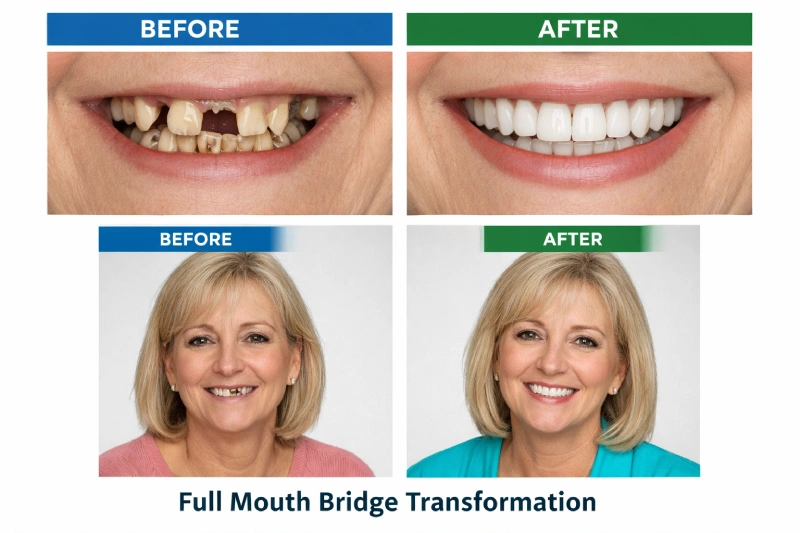
Sarah was 52 years old and had a longstanding issue with missing teeth. She had lost many teeth in her upper and lower jaw because of severe dental caries. Sarah had been using partial dentures for some time, but they made her feel uncomfortable, were challenging to clean and left her feeling self-conscious on the odd occasion.
She spoke to her dentist, and they both agreed that a full mouth bridge would be her best option. He advised a traditional implant-supported full mouth bridge because she did not have enough remaining healthy natural teeth to support traditional bridges. Sarah had been worried about the cost and the procedure at first, but after speaking with her dentist and realising how happy she’d be long-term, she took the plunge.
The Procedure
Sarah’s treatment plan included implant surgery, where dental implants were placed in her jawbone. This provided a stable foundation for her full mouth bridge. After a healing period, her dentist attached the custom-made bridge, which looked and felt just like natural teeth.
The Outcome
Now, Sarah can smile with confidence, eat her favourite foods without any discomfort, and speak clearly without worrying about her dentures slipping. She found the procedure to be well worth the investment, as it improved both her quality of life and her oral health.
Sarah’s experience demonstrates how a full mouth bridge can be a life-changing solution for those who need significant dental restoration.